Pouring Concrete in the Sky
The foundation of a megatall dictates its absolute limits. You cannot build 800 meters high without securing hundreds of meters deep into the earth. When solid bedrock is unavailable, engineering pivots to sheer mass and friction.
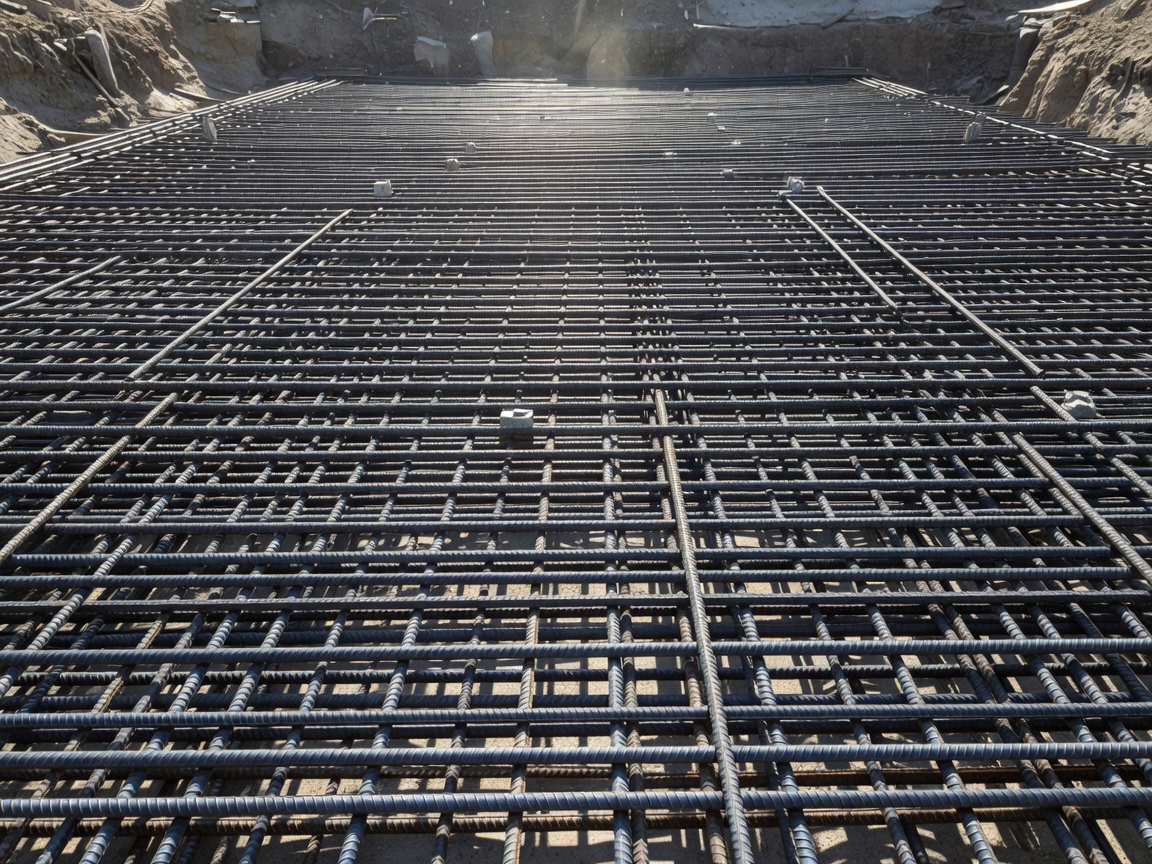
The Mat Foundation
Megatalls sit on concrete rafts up to 4 or 5 meters thick. For the Burj Khalifa, the raft foundation is 3.7 meters thick, constructed in four separate pours totaling 12,500 cubic meters of concrete.
The Thermal Challenge
Curing concrete releases heat (exothermic hydration). If a massive pour gets too hot, it cracks, compromising the entire tower. Engineers use liquid nitrogen to cool the mix and pour exclusively at night.
Friction Piles
Beneath the mat lie the piles. The Burj Khalifa is supported by 192 bored concrete piles reaching depths of more than 50 meters. Because Dubai's soil is largely loose sand and weak rock, these piles do not rest on solid bedrock. Instead, they rely strictly on the friction between the side of the pile and the surrounding soil to bear the half-million tonne weight.